
PC / Console · First impressions
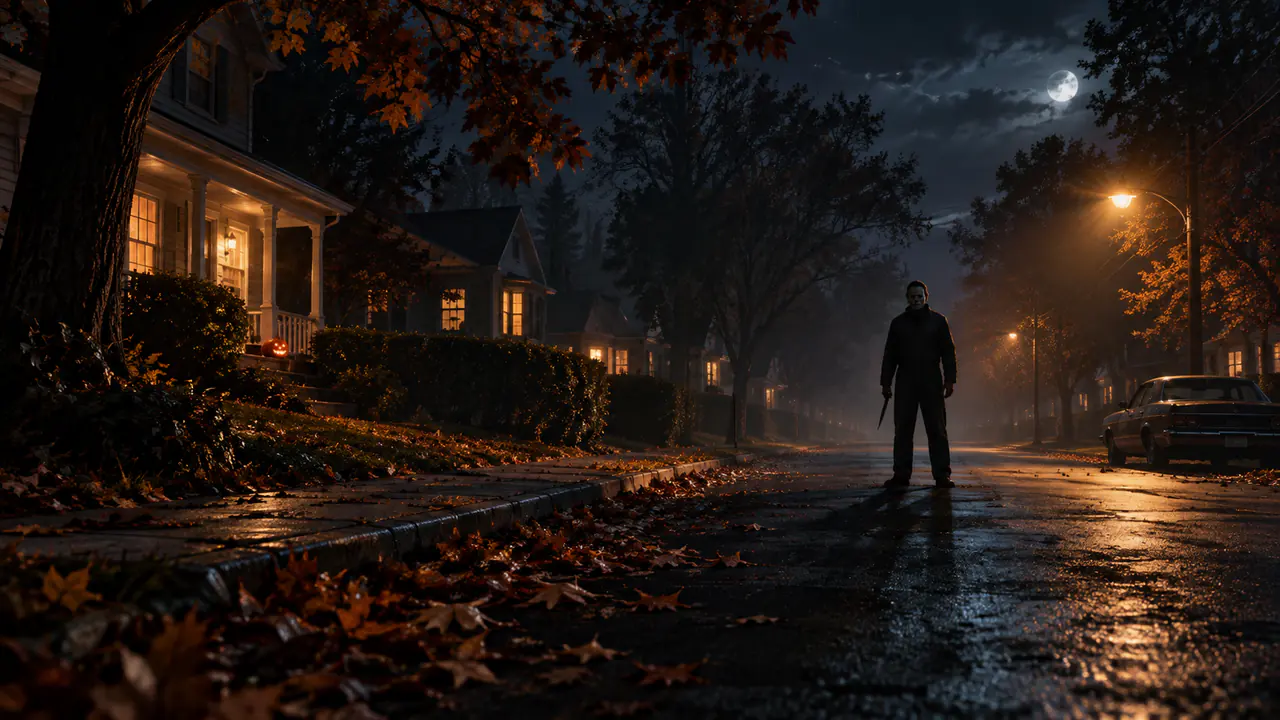
Halloween: The Game is at its best when Haddonfield becomes a trap
The new asymmetrical horror game has a strong Michael Myers fantasy, but its early loot balance and pursuit tools leave survivors with too many easy routes out.
The brief answer
Worth watching for horror fans, with the strongest ideas still waiting for better balance.
Halloween: The Game feels familiar to Friday the 13th players: four residents search Haddonfield for items, weapons, and an escape while one player controls Michael Myers. The atmosphere and stalking tools work, but the early build gives residents too much loot and makes Myers overly dependent on cooldowns and surprise.
What is Halloween: The Game?
Halloween is a four-versus-one asymmetrical horror game set in Haddonfield. Four residents try to survive, rescue civilians, call the police, and reach an escape route. The fifth player is Michael Myers, whose objective is direct: hunt everyone down.
The match also includes civilian NPCs. Residents can recruit them, hand them weapons, use them to call for help, or escort them toward an exit. Three special civilian targets appear in each match, adding another reason to search the neighbourhood instead of simply waiting for the clock to run out.
This assessment is based on a little over two hours with an early-access press build. A day-one patch was expected at launch, so balance and bugs may change.
Residents have plenty to do
There are 12 residents in the early build, each with personal traits. Their matches revolve around searching houses for keys, bolt cutters, firearms, ammunition, repair items, and fuel. Phones can be used to call the police, while cars and other escape points create objectives that can pull the team into dangerous parts of the map.
The perk system is lighter than a traditional talent tree. Perks are unlocked through the Graveyard using points earned in matches, then assembled into a custom deck that can develop during a live game. Dead players are not completely idle either: short skill games can help the team and unlock cards, although a spectator-only option would make the downtime less intrusive.
Michael Myers is a stealth killer, not a sprinter
Myers does not run. His main movement tool is Shape Jump, which lets him disappear and reappear through dark areas when he is not being watched. Stalking builds his threat level, and the higher levels unlock harder hits and more elaborate environmental executions.
That creates the best moments in the game. A dark house, a disabled light, and a survivor focused on a phone or car can turn into a sudden grab and execution. Reality Tear can close distance instantly, while an EMP can disable lights and reopen routes through the map. Both abilities have long cooldowns, however.
In the early build, survivors quickly learned to stand under street lamps and stay in open areas. When Shape Jump and the emergency abilities were unavailable, Myers could struggle to catch a fast resident. Lowering the amount of loot would encourage more house-to-house searching and give the killer more opportunities to create those ambushes.
- Shape Jump makes darkness meaningful
- NPCs create moving objectives
- Environmental executions sell the fantasy
- Voice chat supports tense encounters
- Early houses can contain too much loot
- Cooldowns leave Myers helpless in the light
- Some executions and car interactions look janky
- Tracking noise can be difficult to read
The single-player mode is a tutorial with atmosphere
A short single-player mode follows events from the original film and teaches the basics of playing Myers. It is brief, but it is worth completing before multiplayer: the killer can feel clumsy until Shape Jump, stalking, light control, and the ability cooldowns become familiar.
What the hands-on matches revealed
Playing Myers produced the clearest picture of the game’s potential. A successful hunt starts with information: sound blips, stalking opportunities, the minimap, and special-target markers. From there, the killer has to choose when to cut power, spend a jump token, or commit to a long execution while residents work on a car or call the police.
The resident match showed the opposite tension. Characters move quickly and can arm themselves, but the large loot pool sometimes turns the first house into a complete escape kit. When Myers arrives, fixed-camera moments, fences, cars, and voice lines produce memorable chaos; when his tools are on cooldown, the chase can become a straight sprint to a streetlight.
Should you play it?
Halloween: The Game is promising for players who miss the social panic of Friday the 13th. Its strongest identity comes from making darkness, light, NPCs, and the neighbourhood itself part of the hunt. The early build is not yet a polished recommendation for everyone, though. Expect rough interactions, uneven tracking, and a balance pass that has not fully arrived.
If you already enjoy asymmetrical horror, the Deluxe release is the most defensible entry point for testing the loop early. Everyone else should watch the launch patch and see whether the loot economy gives Myers more consistent pressure.
Frequently asked questions
Is Halloween: The Game like Friday the 13th?
Yes in its four-versus-one structure and emphasis on a cinematic killer, but Halloween adds civilian NPCs, recruitable objectives, perk decks, and Michael’s light-and-shadow movement.
Can you play as Michael Myers solo?
Yes. The short single-player mode teaches Myers’ core tools and follows events inspired by the original film.
What is the biggest early problem?
The loot pool appears too generous. Residents can sometimes find the items needed to escape in their first house, reducing the time Myers has to build pressure.
Should you buy it at launch?
Fans of asymmetrical horror have a reason to try it, but cautious players should wait for the day-one balance and bug fixes before making a final judgment.
Based on Wiggly Loops’ “I Played the New Halloween Game” video. Release timing, balance, and features may change after publication.

Sofia Alvarez
Evidence-led verdicts that name the right audience, the real caveat, and the conditions behind every recommendation.
Continue reading