
Guides · Spoiler-free first hour
Silent Hill: Townfall first-hour guide: what to do first without spoilers
Start Silent Hill: Townfall without story spoilers: use the CRTV wisely, avoid wasteful fights, protect resources and learn a reliable first-hour routine.
The brief answer
The first-hour rule
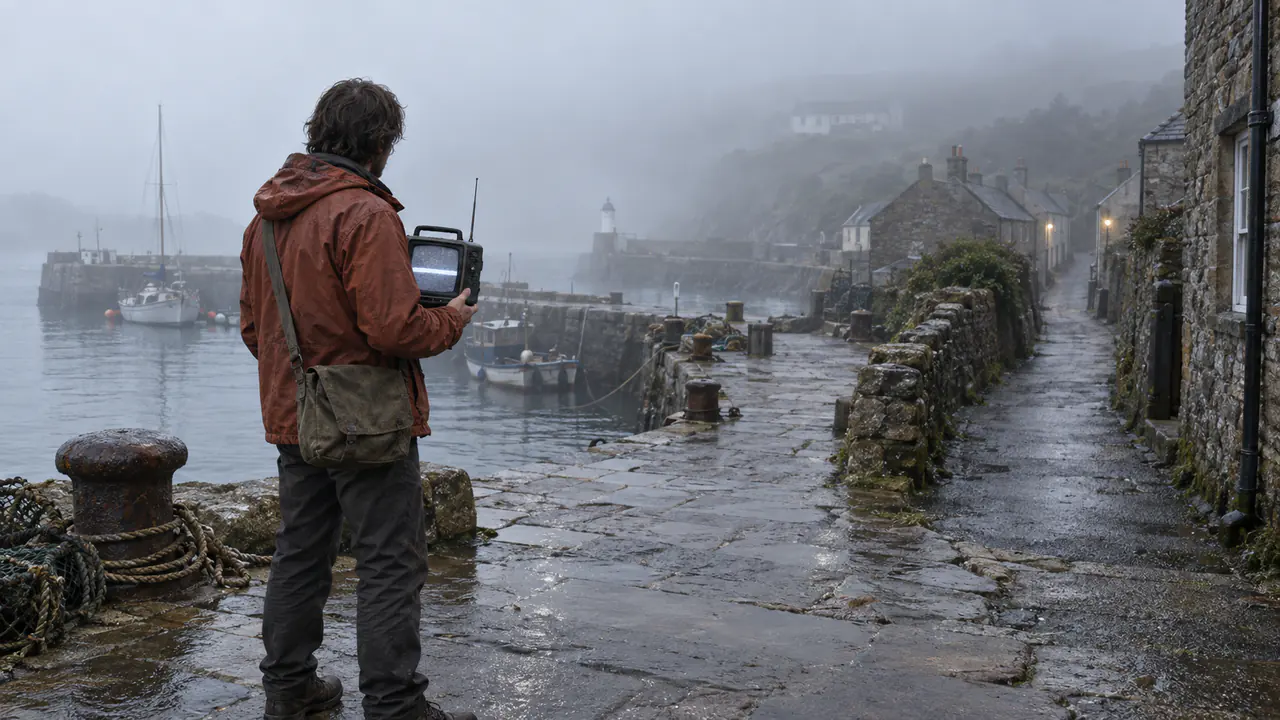
Slow down before each new space. Listen, check the map, use the CRTV for one clear question, then choose the safest route. Fighting is a last resort, not the default objective.
The best way to start Silent Hill: Townfall is to move slowly, gather information before committing to a route, and avoid fighting unless an enemy blocks the only practical way forward. Use the CRTV in short checks, put it away before moving, and protect weapons and healing for situations you cannot safely bypass. The opening rewards attention more than aggression.
This guide is spoiler-safe. It does not name an opening puzzle, reveal a code, tell you where to find an item, prescribe a story route or describe what happens in a scene. It covers the systems Konami shows publicly and the habits that completed reviewers and early players found useful in the launch version.
Before you start: choose the kind of friction you want
Townfall separates threat difficulty from puzzle assistance. The launch version offers Story, Normal and Nightmare threat modes, while puzzle settings include Normal and Hinted. That split matters: wanting gentler stealth does not mean you need puzzle highlighting, and wanting harder encounters does not require more obscure clues.
Choose for the experience you actually want, not the badge you think you should earn. Story is a sensible starting point if repeated first-person stealth failures would stop you enjoying the mystery. Normal is the intended all-round challenge reported by the game's menu. Hinted puzzle mode can reduce the chance that relevant text disappears into a busy document, but it does not turn every puzzle into a waypoint.
The first-person view also makes distance and motion uncomfortable for some players. Check the available camera and accessibility options before the tension rises, turn on subtitles or closed captions if they help you follow audio cues, and take a break if the camera makes you feel unwell. Do not try to push through motion sickness for the sake of momentum.
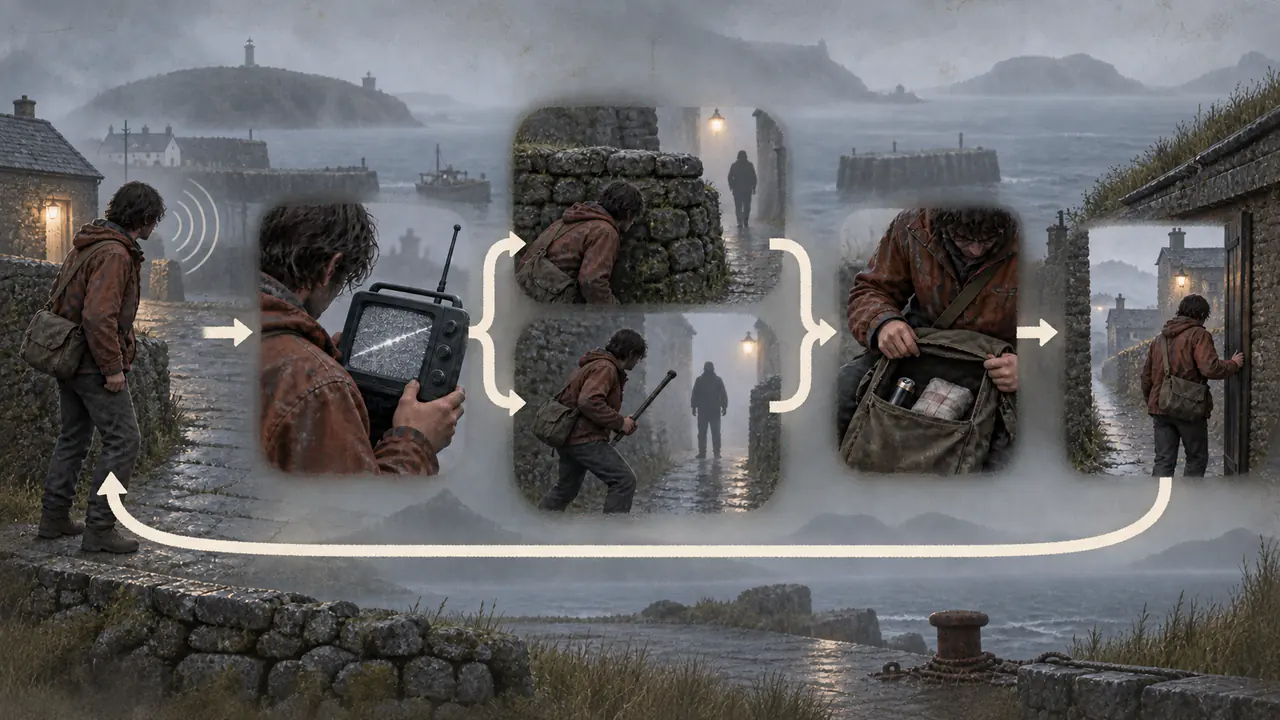
Use this six-step loop in every new space
- Stop and listen. Townfall uses sound as information. Before opening another route or crossing an exposed area, let the scene settle and work out whether the noise is environmental, a signal or a nearby threat.
- Read the space without committing. Note cover, corners, alternate paths and the way back. The peek mechanic and low cover exist so you can learn a route before stepping into it.
- Check the map and nearby evidence. The map records useful information such as visited rooms and blocked doors, while documents and ordinary environmental details can turn a vague objective into a workable next step.
- Ask the CRTV one question. Are you looking for a threat, a clue signal or a story fragment? Tune for that purpose, take in the answer, then lower the device so you can see the real space again.
- Choose evade, distract or fight—in that order. If an alternate route exists, take it. If sound can pull a threat away, use that option. Spend a weapon only when a safe route is unavailable or the cost of retreat is worse.
- Reset before pushing deeper. Once safe, update your mental route, search without rushing and use any save opportunity you find. Reviewers report that some stretches between saves can be long.
This loop is more valuable than memorising a walkthrough. It continues to work when the layout changes, when more than one signal appears, and when a puzzle asks you to connect information rather than find a glowing answer.
How to use the CRTV without letting it use you
The CRTV is not just Townfall's version of a radio. Official material says its unstable signals can reveal threats, story fragments and puzzle hints. That makes it a sensor, a clue viewer and a narrative device—but not an all-seeing minimap.
For threats, tune from cover and watch long enough to understand direction of travel. Then put the CRTV away and compare the signal with the actual doors, walls and hiding places around you. Completed reviews report that the display can be imprecise and that several nearby enemies may occupy separate signals. Locking onto one image and assuming the rest of the space is clear is a common way to make a good scan useless.
For clues, let a clip loop at least once before moving on. Look for a repeated place, object or relationship rather than expecting a written objective. If the hint still makes no sense, check the map and recent documents before searching the entire town again. Townfall often makes information useful only after two pieces are seen together.
The crucial habit is to lower the device. Raising the CRTV narrows your attention, and a correct signal does not protect you from the part of the room you are no longer watching. Scan, decide, move, then scan again at the next safe decision point.
When to evade and when to fight
Make evasion your default, not an emergency improvisation. Konami describes stealth as a full option: you can track from cover, use the environment and lure danger with sound. Independent reviews consistently report that melee weapons degrade, ammunition is scarce and gunfire can attract more trouble. Clearing every area is therefore an expensive goal the game does not ask you to pursue.
Start with three questions:
- Is there a route around the threat?
- Can a sound distraction create a safer opening?
- If you fight, what necessary progress does that cost buy?
If the third answer is only “I want the area to feel empty,” keep the weapon. Fight when you are cornered, when a required path cannot be opened safely another way, or when breaking contact costs more health and supplies than finishing the encounter. Even then, leave once the route is available; Townfall's combat supports survival, not room-clearing for its own sake.
Do not assume every encounter has a combat solution. Player reports and completed reviews indicate that some sequences sharply limit or remove that option. Learning to observe patrol space, wait for a gap and use cover during the opening is preparation, not cowardice.
Protect resources with simple rules
Townfall's resource economy becomes easier to read when every item has a job:
- Melee weapons buy space. Their durability is limited, so spending one to clear an optional corner can leave you exposed at a mandatory bottleneck.
- Ammunition buys certainty at a noise cost. It can solve an immediate threat, but it is scarce and shots may draw attention.
- Healing buys another attempt. Avoid spending it to justify a bad route. If you can retreat, re-scan and cross cleanly, do that first.
- Information saves every other resource. A marked door, a looped CRTV clue or a document you actually read can prevent a wasted search and an unnecessary encounter.
You do not need a perfect inventory or a rigid quota. You need enough reserve to survive the situation you cannot predict. Search side spaces when the threat picture is clear, and postpone optional curiosity when several signals, poor visibility or a weak escape route make the cost uncertain.
Seven early mistakes to avoid
- Playing it like an action-horror clear-out. Enemies are obstacles, not a checklist.
- Walking with the CRTV raised for too long. The device provides information while taking attention away from the room.
- Tracking one signal and forgetting there may be others. Cycle deliberately before crossing exposed ground.
- Ignoring the map after the first look. Its annotations reduce repeated door checks and aimless backtracking.
- Skimming documents only for highlighted words. Clues can depend on context and relationships, not a single answer-shaped phrase.
- Spending a weapon because you found it. Discovery is not a prompt to use an item immediately.
- Opening a full walkthrough when one clue is unclear. Rewatch the signal, check the map and reread the evidence first; a route guide can spoil far more than the puzzle you meant to solve.
A spoiler-free decision guide
| Situation | First response | Why |
|---|---|---|
| You hear danger but cannot place it | Return to cover, listen, then make a short CRTV check | Movement before identification turns uncertainty into a chase |
| Several signals appear | Cycle through them and compare each with the physical route | The CRTV does not show every threat on one perfect display |
| A threat blocks one path | Look for an alternate route or sound distraction before drawing a weapon | Evasion preserves durability, ammunition and health |
| A clue clip seems meaningless | Let it repeat, then check the map and recent documents | The answer may be a relationship between pieces of evidence |
| You have been exploring without saving | Use the next save opportunity before taking an uncertain route | Some failed encounters can otherwise erase a long cautious stretch |
What a good first hour looks like
A successful first hour is not one in which you collect everything or fight perfectly. It is one in which you understand the rhythm: observe, gather evidence, use the CRTV with a purpose, choose the lowest-cost route and save enough resources for forced trouble.
If you are still deciding whether that slower, stealth-led structure suits you, read TaskUp's evidence-based verdict on whether Silent Hill: Townfall is worth playing now. The answer depends heavily on whether careful exploration and puzzle-led horror sound rewarding or restrictive to you.
Frequently asked questions
Do I need to play another Silent Hill first?
No. Konami describes Townfall as a complete, self-contained story for newcomers and returning players.
Can you fight enemies in Townfall?
Yes. Townfall has melee weapons, blocking and firearms, but weapons and ammunition are limited. The safer opening habit is to evade or distract when possible and fight when necessary.
Is the CRTV only an enemy detector?
No. Official material says CRTV signals can reveal nearby threats, story fragments and puzzle hints. Use it according to the question you are trying to answer.
Which difficulty should a first-time player choose?
Normal is the developers' intended starting point, as reported in TechRadar's completed review. Choose Story if stealth pressure would block your progress. Puzzle assistance is separate, so you can use Hinted puzzles without making encounters easier. This guide does not assume that every setting can be changed after the run begins.
Sources, method and scope
This guide was checked on September 27, 2026 against Konami's launch announcement, the official Townfall feature descriptions, Konami's 18-minute gameplay presentation, the official Steam news feed, completed reviews from PC Gamer, TechRadar, GamesRadar+ and Steam Deck HQ, and recent player reports on Steam and Reddit. Official sources establish release facts and intended systems; repeated independent reports inform practical habits and limitations. Isolated routes, exact durability claims and puzzle solutions were excluded.
No Marcus Bell or TaskUp hands-on session was supplied. This is evidence-based launch-version guidance, not a claimed personal playthrough. No public numbered build was available at the time of checking; recheck the official news feed after any patch that changes CRTV behaviour, stealth, difficulty or resource balance.
Based on Konami launch announcement and official Townfall materials. Release timing, balance, and features may change after publication.

Marcus Bell
Reproducible walkthroughs, source quality, corrections, accessibility, and maintenance rules that keep answers useful.
Continue reading